
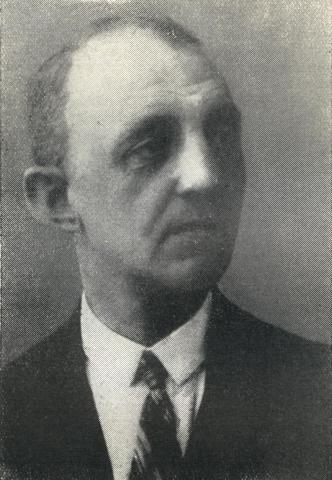
Max Silber, archaeologist and director of the Salzburg Museum (then also known as the Städtisches Museum Carolino Augusteum) from 1933 to 1942, had a pronounced German nationalist socialization. Already during his school years in Salzburg, Silber, who came from a well-known Salzburg family, was a member of the Geheime Verbindung Rugia, a German nationalist high school fraternity that practiced compulsory dueling. While studying classical languages, archaeology and philology at the University of Vienna, he joined the Bruna Sudetia, another German nationalist fraternity that also practiced compulsory duelling. During the First World War, Silber was declared unfit for military service after having been wounded twice, and returned to Salzburg. From 1921 onward, the archaeologist was a member of the Gesellschaft für Salzburger Landeskunde (Society for the Study of Salzburg Regional Culture) and that same year obtained a position at the Salzburg Museum. Silber's brother-in-law, Karl Adrian (1861–1949), had been curating the folk life collection at the Salzburg Museum since 1904. From 1923, Max Silber worked as an assistant to the museum director, Julius Leisching (1865–1933), and in 1928, he officially became curator at the Salzburg Museum. In 1933, after Leisching's death, Silber took over the management of the Salzburg Museum—though without the official title of museum director—and of the Salzburger Museumsverein. This year, according to his own statement, the museum manager also resigned from the Greater German People's Party (Großdeutsche Volkspartei), of which he had been a member since 1922. During the Austrofascist era, Silber, as a municipal official, was a member of the Vaterländische Front. Max Silber enthusiastically welcomed the Nazi seizure of power in Austria as a "saving act by Adolf Hitler" and officially applied for membership in the NSDAP. The Salzburg NSDAP district leadership endorsed this, noting that the archaeologist had already spoken out in favour of the NSDAP before the upheaval and was a member of a German nationalist trade union. In September 1938, Max Silber himself stated in writing to the mayor of Salzburg, Anton Giger (1885–1945), that he was a member of the NSDAP, the Nationalsozialistische Volkswohlfahrt (NSV- National Socialist People’s Welfare), the Reichsluftschutzbund(Reich Air Raid Protection League) and the Beamtenbund (German Civil Service Association); according to files of the German Federal Archives (Berlin Document Center), he received the NSDAP membership number 6,344,475 in May 1938. After the annexation of Austria to the German Reich, politicians and administrators valued Silber's German nationalist and National Socialist convictions. During the Nazi era, Silber viewed the promotion of racist and war-related objectives as both a personal cause and a “pan-German” mission, as he put it. As early as March 1938, Silber was already planning to implement his ideas for restructuring the museum he headed in accordance with Nazi ideology. He pushed for the expansion of the collection of “genealogical” sources and photographic portraits, emphasising their significance “for racial studies, personal history and family history”, and for collaboration with the SS institution Ahnenerbe (Ancestral Heritage). He also planned to reorganize the departments of folklore, prehistory and early history according to Nazi criteria. Silber worked closely with Karl Springenschmid (1897–1981), head of the Nazi "Gauschulungsamt"(Gau Schooling Office) and organiser of the Salzburg book burning in April 1938, as well as with Albert Reitter (1895–1962), the culture representative of the Gauleiterregarding the implementation of his cultural and museum policy goals. Springenschmid and Reitter were both SS members; the latter, a well-known National Socialist, had also been a member of the Salzburg Museum's administration board until the NSDAP was banned in June 1933 and therefore knew Silber well. Max Silber also maintained numerous contacts in Vienna from his student days. In late 1938/early 1939, as part of a “special operation”, the Ministry of Internal and Cultural Affairs commissioned him to inventory the art und cultural assets in the monasteries of Michaelbeuern and Mülln (which belonged to Michaelbeuern) for possible further utilisation following the planned seizure. Max Silber had no scruples about pushing for the allocation of "Aryanized" and expropriated objects to the Salzburg Museum. He even intervened with the Gestapo to secure the transfer of the painting "Ischl circa 1820" (also known as "Crucifix in front of Salzkammergut Landscape") by Franz Steinfeld from the "Aryanized" villa of Eugen and Ida Herz-Kestranek in St. Gilgen to the museum. The work was restituted to the Herz-Kestranek family by the Salzburg Museum (then the Salzburg Museum Carolino Augusteum/SMCA) in the 1980s. In 1941, the Salzburg Reich governor’s office appointed Max Silber as Salzburg's expert "for the utilisation of jewellery and art objects from Jewish ownership". Also in 1941, the Gau capital of Salzburg commissioned Silber and the Salzburg Museum to submit proposals for new street names. The museum director nominated "fallen SA men from the Nazi struggle period", that is, the period following the ban of the NSDAP in June 1933, during which the failed Nazi putsch of July 1934 also took place. On the occasion of Adolf Hitler's birthday on 20 April 1941, Salzburg's mayor, Giger, officially appointed Max Silber as museum director. Just a few days earlier, he had nominated him as a member of the newly formed “Beirat für kulturelle Belange der Gauhauptstadt Salzburg” (Advisory Board for Cultural Affairs of the Gau Capital of Salzburg). Since 1940, Max Silber had also been a full member of the Archaeological Institute of the German Reich. The archaeologist’s marriage that year to Pauline Pfusterwimmer (1876–1967) from Salzburg remained childless. The mayor of Salzburg and other representatives of the city and the Gau of Salzburg attended Max Silber's funeral on 5 August 1942.
Max Silber
Peter Danner, Archäologie in Salzburg von 1938 bis 1945, in: Daniel Modl/Karl Peitler (Hg.), Archäologie in Österreich 1938–1945. Beiträge zum internationalen Symposium vom 27. bis 29. April 2015 am Universalmuseum Joanneum in Graz (= Schild von Steier, Beiheft 8/Forschungen zur geschichtlichen Landeskunde der Steiermark 79) Graz 2020, 606–663.
Martin Hochleitner, Chronologie des Salzburg Museum, in: Salzburg Museum (Hg.), Anschluss, Krieg & Trümmer. Salzburg und sein Museum im Nationalsozialismus (= Jahresschrift des Salzburg Museum 60), Salzburg 2018, 17–38.
Susanne Rolinek, "…Anteil nehmen an der Neugestaltung des großen deutschen Vaterlandes". Max Silber und das Salzburg Museum bis 1942, in: Salzburg Museum (Hg.), Anschluss, Krieg & Trümmer. Salzburg und sein Museum im Nationalsozialismus (= Jahresschrift des Salzburg Museum 60), Salzburg 2018, 131–143.
Max Silber, Über antike Beleuchtungsgeräte, Dissertation Universität Wien 1914.
Ders., Fund einer römischen Bronze-Kanne in Salzburg, in: Salzburger Museumsblätter 8 (1929), 1-2.
Ders. (gemeinsam mit Oliver Klose), Iuvavum. Führer durch die Altertumssammlungen des Museums Carolino Augusteum in Salzburg, Wien 1929.
Ders., Neuerwerbungen an Bronze-Äxten in der Prähistorischen Sammlung, Salzburg 1932.
Ders., Salzburg in Großdeutschland, in: Salzburger Museumsblätter 17 (1938), 1-3.
Ders., Geschichtliche und kulturelle Zusammenhänge Salzburgs mit Böhmen und Mähren bis zum Ausgang des Mittelalters, in: Salzburger Museumsblätter 18 (1939), 1-2.
Ders., Mozart-Erinnerungen im Stadt-Museum, in: Salzburger Museumsblätter 20 (1941), 5-6.
Ders. Paracelsus-Feier Salzburg 1941. Kurzer Führer durch die Paracelsus-Ausstellung zur 400. Wiederkehr des Todestages von Theophrastus Paracelsus, Salzburg 1941.
Ders., Isis-Darstellungen in keltisch-germanischer Auffassung. Ein Beitrag zur Deutung des Noreia Isis, in: Carinthia I (1942), 132.
BArch Berlin-Lichterfelde, Sammlung Berlin Document Center (BDC), Personenbezogene Unterlagen der Reichskulturkammer (RKK), R 9361-V/33681, Silber, Max.
Salzburg Museum, Archiv, Hausakten.
Stadtarchiv Salzburg, Personal-Kartei, Max Silber.